
EV charger installation for homes and workplaces
Charging at your own property is convenient, and it pairs naturally with solar. Getting the electrical side right matters as much as the charger itself.
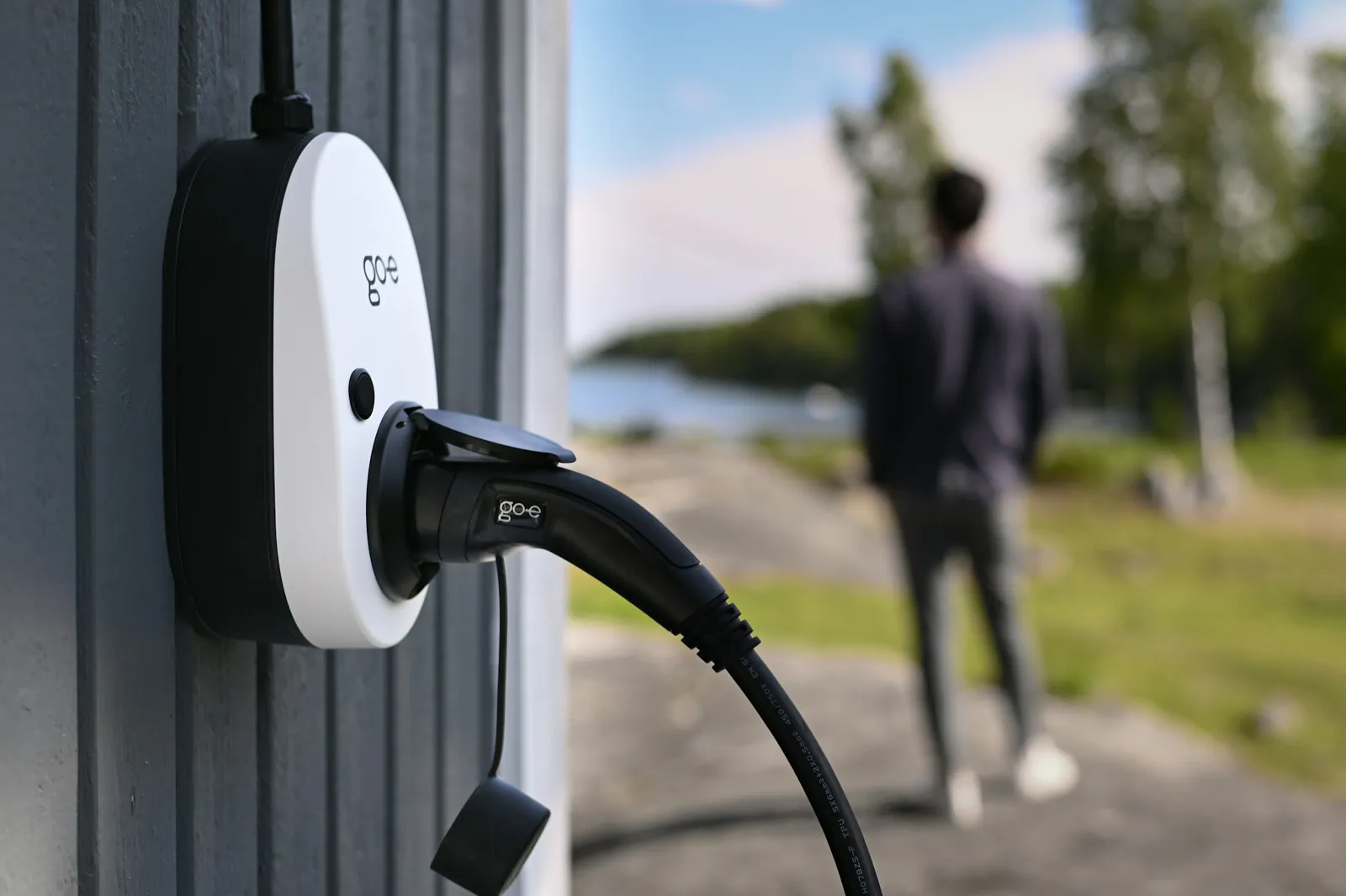
Choosing and installing a charge point
A home charge point is a dedicated, permanently wired unit, much safer and faster than using a three-pin plug. Most homes with off-street parking can accommodate one, but the right charger depends on your vehicle, your electrical supply and where you park.
Workplace charging brings further questions: how many bays, how power is shared between them, who can use them, and whether the building’s supply has capacity. We look at the electrical installation first, because that is what determines what is possible and how much work is needed.
What the service includes
Suitability survey
Checking the consumer unit, supply capacity, earthing arrangement and the route for cabling between charger and distribution board.
Charger selection
Advising on tethered or untethered units, connector type, power rating and smart features.
Installation
Mounting the charger, installing a dedicated circuit with appropriate protection and testing the finished installation.
Solar and battery compatibility
Where you have or plan solar, discussing solar-aware charging modes that prioritise surplus generation.
Workplace schemes
Planning multi-bay installations, load management and user access arrangements for businesses.
Handover
Showing you how to use the charger, its app and settings, with documentation.
Benefits and practical considerations
Benefits
- Faster and safer than charging from a standard socket.
- Charge at home overnight, potentially on a time-of-use tariff.
- Smart chargers can schedule charging and, with solar, use more of your own generation.
- A workplace charge point can support staff and visitors, and fleet vehicles.
Things to consider
- Some properties need electrical upgrades, such as a larger supply or additional protection, before a charger can be fitted.
- The earthing arrangement of the property affects how a charger must be installed.
- Grants for charge points may exist for certain households, but eligibility rules apply and change.
- Charge points sold in Great Britain are required to meet smart charging regulations, which affect their default behaviour.
How installation works
Tell us about your vehicle and parking
Where you park, the vehicle you drive and how you use it.
Survey
We check the electrical installation and cable route, remotely using photographs where suitable, or on site.
Quotation
A written proposal covering the charger, any electrical work and the connection paperwork.
Installation and testing
The charger is installed and tested, and notification to the network operator is made where required.
Practical information
- Typical home charge rate
- Many home chargers are rated at 7 kW on a single-phase supply, which can add a significant amount of range overnight, depending on the vehicle.
- Three-phase supplies
- Higher charging rates, such as 11 kW or 22 kW, need a three-phase supply and a vehicle able to use it.
- Supply capacity
- Your property’s main fuse and total demand determine whether a charger can be added without upgrades, or whether load management is needed.
- Tethered or untethered
- Tethered units have a cable attached. Untethered units have a socket, so you use your own cable.
- Network notification
- Charge point installations are generally notified to the Distribution Network Operator, and in some cases need approval first.
Common questions
Read all FAQsUsually, if you have off-street parking and a suitable electrical supply. We check the installation before recommending anything.
Many smart chargers have a solar mode which tries to charge using surplus generation. How well that works depends on your usage and the equipment.
No. But some energy suppliers offer tariffs with cheaper overnight rates that suit EV charging, and smart chargers can schedule around them.
Yes. Workplace installations usually involve more planning around capacity and access, so we begin with a site review.
Related services
- Solar Panel InstallationDesign and installation of solar PV for homes, from roof assessment to commissioning and handover.
- Battery StorageHome and commercial batteries to store surplus solar power and manage when you use it.
- Commercial Solar InstallationsSolar PV for offices, warehouses, industrial units and other commercial buildings.
Ready to talk about ev charger installation?
Book a free, no-obligation consultation and we will talk through what is realistic for your home or business.